
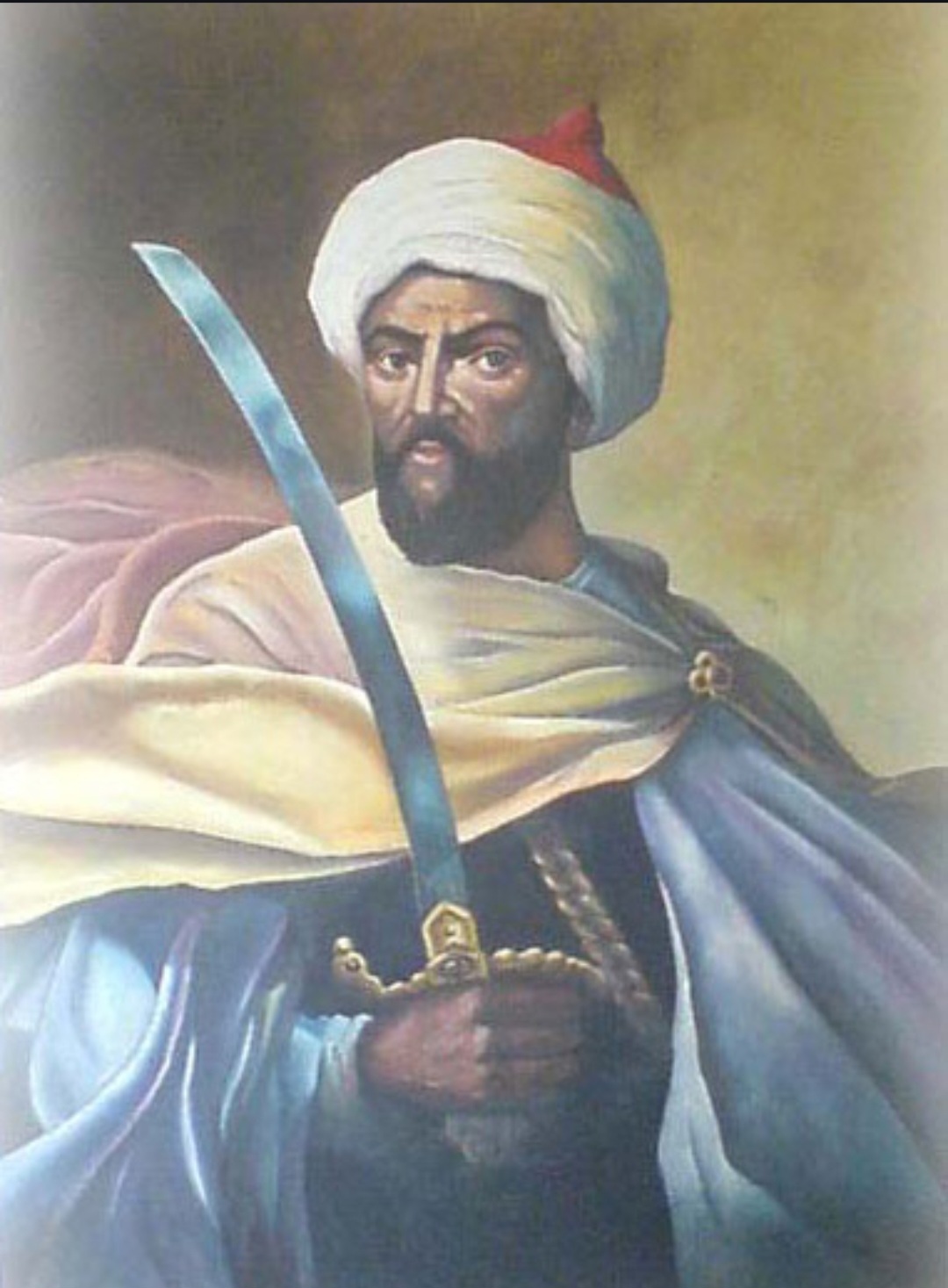

1. He was the Son of an Enslaved African Woman, He Rose to Become a Powerful Sultan. Moulay Ismail was born in 1645 to the Arab ruler of Sijilmassa, Moulay Sharif ben Ali, and a Black enslaved woman whose name has been lost to history. Despite his mother’s status, he was a favored son and, in accordance with Islamic custom, was recognized by his father. As the seventh son, his path to the throne was not direct. However, following the death of his half-brother, Moulay Rashid, in 1672, Ismail ascended to the sultanate, beginning a reign that would become the longest in Moroccan history.
2. He Created the “Black Guard,” an Elite and Loyal Army in a bold and controversial move, Moulay Ismail created a personal army known as the “Black Guard” or “Abid al-Bukhari” (Slaves of al-Bukhari). This elite force was composed of enslaved and free Black men from across Morocco, who were trained from a young age and were fiercely loyal to the Sultan alone. The creation of this force, which at its peak numbered over 150,000 soldiers, was a strategic move to consolidate his power and reduce his reliance on often rebellious Arab and Berber tribes.
3. He Had a Legendary Number of Children. Moulay Ismail is renowned for having fathered a staggering number of children. His harem consisted of over 500 women, and he is believed to have had more than 800 confirmed biological children. This incredible feat of procreation has been a subject of fascination and study, with some historical accounts placing the number of his offspring as high as 1,171. His prolificacy has made him one of the most prodigious fathers in recorded history.
4. He Expelled European Powers and Solidified Moroccan Sovereignty
Moulay Ismail was a fierce defender of Moroccan independence. He successfully waged war against European powers that had established strongholds along the Moroccan coast. His military campaigns led to the expulsion of the English from Tangier in 1684 and the Spanish from Larache in 1689. His resistance to European encroachment and his ability to maintain Moroccan sovereignty during a period of increasing colonial interest solidified his reputation as a powerful and effective ruler.
5. He transformed Meknes into a Grand Imperial Capital. Inspired by his contemporary, King Louis XIV of France, Moulay Ismail embarked on a massive building program to transform Meknes into a grand imperial capital. He oversaw the construction of enormous palaces, mosques, gardens, and monumental gates, including the famous Bab al-Mansour. His vision for Meknes was so ambitious that the city became known as the “Versailles of Morocco.” This extensive construction, however, came at a great cost, often relying on the forced labor of European Christian slaves captured by his corsairs.
-Leon kwasi Kuntuo-Asare




Leave a Reply