
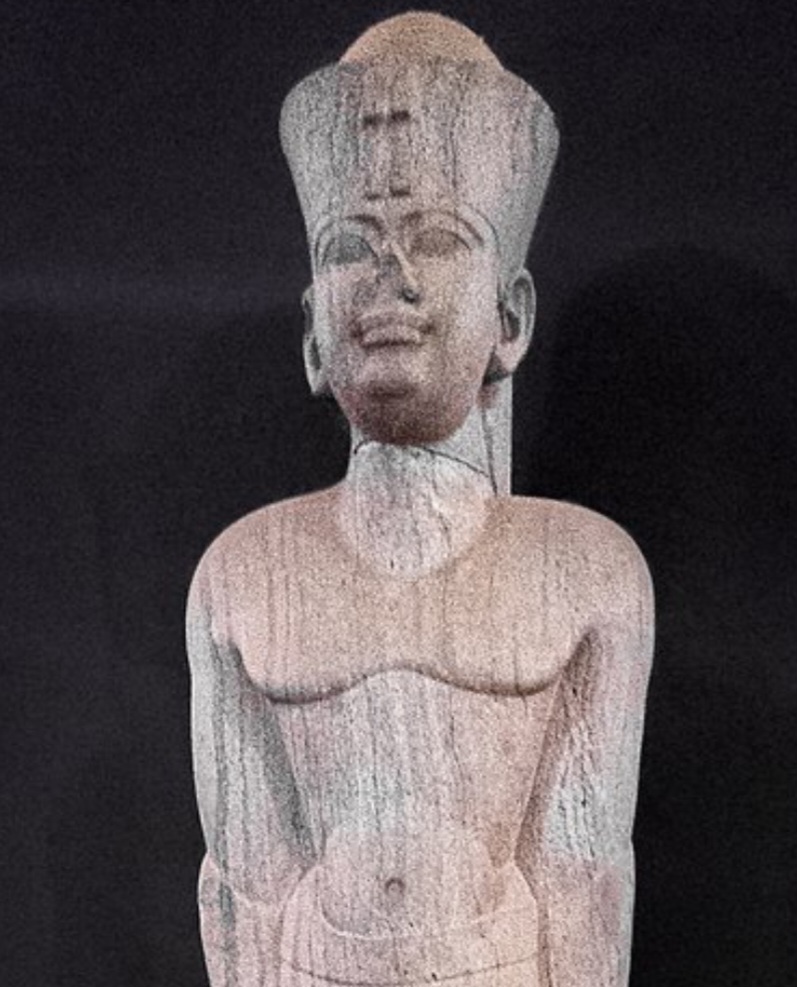

By: Leon Kwasi Kuntuo-Asare
ORIGINS
Atlanersa by many scholars is believed to have been the son of either Taharqa or, less likely, Tantamani, both prominent Kushite kings of the 25th Dynasty who ruled both Kush and Egypt. His mother’s name is only partially preserved from inscriptions, ending in “…salka.” The possibility that Taharqa was his father is supported by Atlanersa’s choice of Nuri as his burial site, following Taharqa’s precedent, suggesting a desire to be near and honor his father. Some scholars theorize that Atlanersa might have been too young to ascend the throne immediately after his father’s death, and would of been to inexperience to properly deal with the maturing and the political landscape, especially given the Kushites turbulent withdrawal from Egypt, which could explain the intervening reign of Tantamani.
HIS REIGN AND CONSOLIDATION OF POWER IN THE SOUTH
It is believed that Atlanersa’s reign occurred from around 653 to 643 BCE. His rule happened in a critical moment in Kushite history. The 25th Dynasty’s hold on Egypt had crumbled under the pressure of Assyrian invasions, forcing the Kushite rulers to retreat south to their Nubian heartland. As a consequence, Atlanersa inherited a kingdom that had lost its vast northern territories and faced the challenge of consolidating its power and identity focused on Napata and the surrounding region. During his time on the Kushite throne, he oversaw the continued cultural integration of Egyptian concepts and institutions within the Napatan kingdom, a process that had been ongoing during the 25th Dynasty. Even though the Kushites political control over Egypt was gone, the cultural and religious ties remained strong.
THE GREAT BUILDER
Atlanersa ordered the construction of his pyramid at the necropolis of Nuri (identified as Nuri 20), signifying the continuation of the tradition of royal pyramid burials that the Kushites had adopted from Egypt. He may have also initiated the construction of a funerary chapel at Nuri.


Evidence suggests he also began work on Temple B700 at Jebel Barkal, an important religious site which was dedicated to the God Amun, further illustrating the enduring influence of Egyptian religious practices in Kush.
STRENGTHEN THE NUBIAN KINGDOM
His rule was focused on strengthening the Napatan state after the imperial overreach into Egypt. This involved solidifying his position as king and reinforcing the legitimacy of the ruling dynasty in the eyes of both the gods and his people.
His Legacy

Although his reign was relatively short when compared to other Kushite kings, it was one of the most significant in many ways:
It marked the geopolitical shift away from Egypt,
Atlanersa contributed to the continuity and evolution of the Kushite state centered at Napata.
His building projects at Nuri and Jebel Barkal emphasized the importance of religious and royal programs in asserting royal authority and maintaining cultural identity for the Kushite people.
He was the link between the pharaonic ambitions of the 25th Dynasty and the subsequent development of the independent Kingdom of Kush, which would continue to flourish in Nubia for nearly a thousand years.
Ruins


Closeup of the ruins of Nuri pyramid 20 of Atlanersa (foreground) and the pyramid of Amaniastabarqa (background


Scarab of Atlanersa from his pyramid in Nuri, now in the Louvre Museum, Paris
For Additional Information And Sources Use Links Below:
https://en.m.wikipedia.org/wiki/Atlanersa
https://pantheon.world/profile/person/Atlanersa
https://historica.fandom.com/wiki/Atlanersa
https://collections.mfa.org/objects/145116/boat-stand-of-king-atlanersa?ctx=31eecba9-7796-4915-8360-25c11f8df191&idx=2




Leave a Reply