
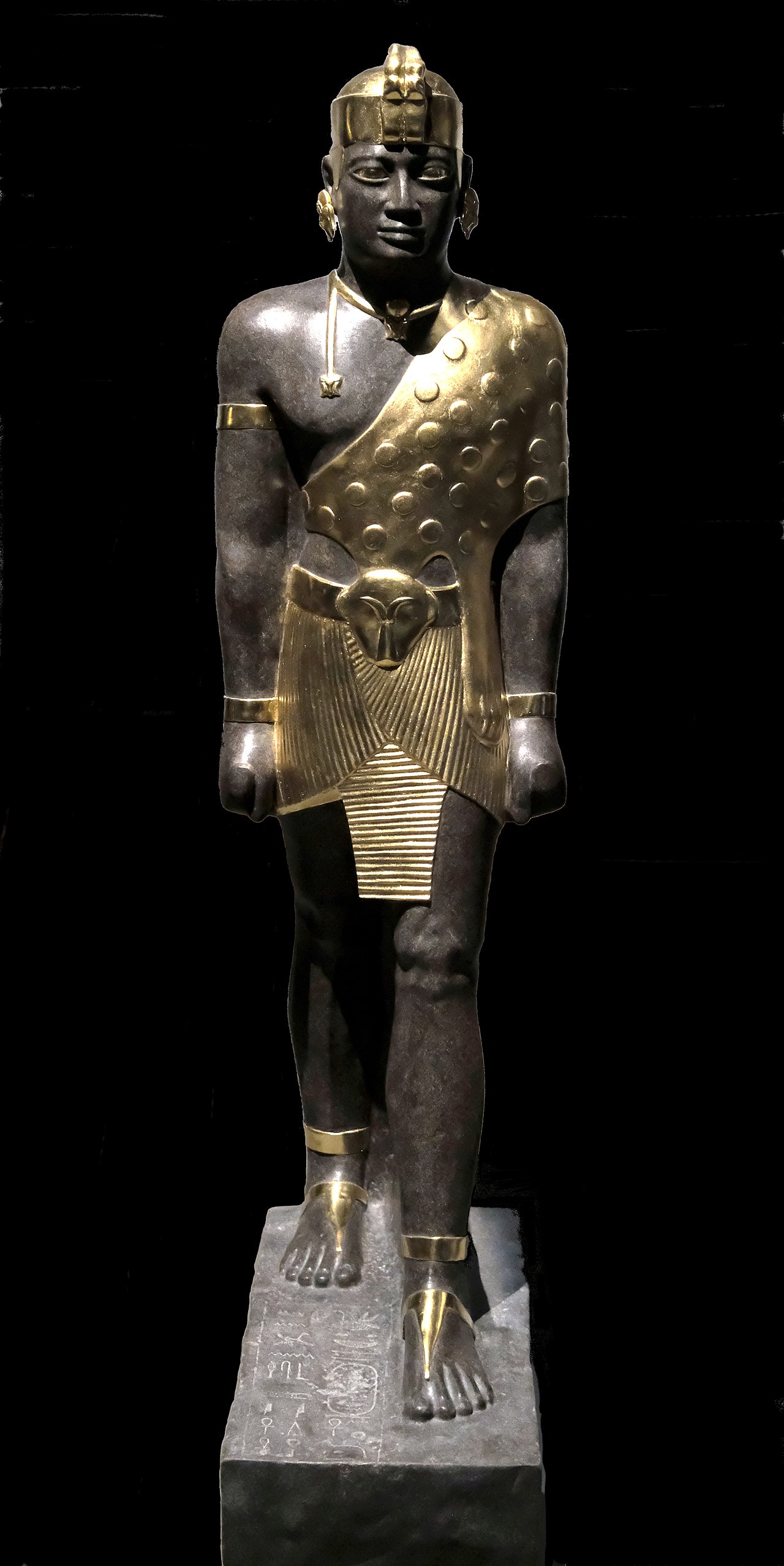

By: Leon Kwasi Kuntuo-Asare
Origins
Senkamanisken was a Kushite (Nubian) king who reigned from approximately 643 to 623 BCE. He presided over a period of transition for Kush. Following the collapse of the 25th Dynasty’s rule over Egypt, the Kushites retreated south to their heartland, centered around Napata ( modern-day Sudan). It is believed he was the son of the previous Kushite king, Altanersa. Growing up in the Kushite capital, Senkamanisken would have been immersed in a culture deeply influenced by centuries of interaction with Egypt, yet distinct in its Nubian identity.
Reign: Consolidating Power and Architectural Endeavors
After the Nubians withdrawal from direct control of Egypt, the Kushite kings (including Senkamanisken) focused on consolidating their authority in their southern territories. Senkamanisken desired to maintain the integrity of the Kushite kingdom in the face of potential external pressures, particularly from the resurgent Saite Dynasty in Egypt under Psamtik I (who had the support of the Assyrians).
Senkamanisken is credited with the completion of Temple B700 at Gebel Barkal, a significant religious center for the Kushites. This emphasizes the continued importance of the worship of Amun in the Napatan kingdom and the king’s role in supporting religious infrastructures. The construction and adornment of such temples were not only viewed as acts of piety, by the NubIan population, but they also served to legitimize the king’s rule and demonstrate the wealth and power of the state.
Legacy
The temple at Gebel Barkal he helped complete stands as a testament to his commitment to the religious traditions and monumental architecture that characterized the Napatan period.The statues and artifacts bearing his name, now housed in museums around the world, serve as important primary sources for scholars studying Kushite history, art, and culture. These objects provide tangible links to a historical figure and offer insights into the political, religious, and artistic currents of his time.
Artifacts


The hieroglyphic inscription on the Temple described the role of God Amun in selecting Sekamanisken as king:
“I said of you (while you were still) in your mother’s womb that you were to be ruler of Kemet (“Black Land”= Egypt). I knew you in the semen, while you were in the egg, that you were to be lord. I made you receive the Great Crown, which Re (the Sun god) caused to appear on the first good occasion. (Inasmuch as) a father makes his son excellent, it is I who decreed kingship) to you. (So) who shall share it with you? For I am the Lord of Heaven. As I give to Re, (so) he gives to his children, from gods to men. It is I who gives you the royal charter…. No other (can) decree (who is to be) king. It is I who grants kingship to whomever I will.”
— Amun inscription, frieze of Sekamanisken, Temple B700, Jebel Barkal.

For Additional Information And Sources Use Links Below:
https://kushsudan.org/history/kingdom-of-kush/
https://www.metmuseum.org/art/collection/search/553419
https://www.brooklynmuseum.org/objects/3443
https://en.m.wikipedia.org/wiki/Senkamanisken



Leave a Reply