

By: Leon Kwasi Kuntuo-Asare
Origins
Bussa was born on the West Coast of Africa in the late 18th century. It is believed by some historians that he was of Nigerian descent. He was likely a free man who was captured by African slave merchants and sold to the British. The British would later transport him to the British colony of Barbados, where slavery had been legal since 1661.
Plantation Life
There is not much information on Bussa prior to the rebellion, but some records show that a man named Bussa, who was a slave, worked as a head officer among the slaves on Bayley’s Plantation; in the Saint Phillip Parish at the approximate time the rebellion would of taken place. His position as a head slave officer would have given Bussa more freedom than the average slave. The Black people in bondage under his supervision would have likely viewed him as somewhat of a leader. Therefore, convincing them to rebel against their brutal British white taskmasters would have been less of a daunting task for him.
Rebellion Leader

The revolt occurred at about the same time the British Parliament was attempting to pass legislation that would somewhat improve the grinding and harsh lives of the slaves on their Caribbean colonies and would have required that the colonial slaves be registered.
Some historians believe that many enslaved Black people falsely believed that the legislation was for Black emancipation, which it wasn’t. That being said, when the legislation was rejected in November of 1815, Bussa and his fellow enslaved collaborators soon began preparation for a slave uprising to free themselves from the bondage and subjugation of the British.
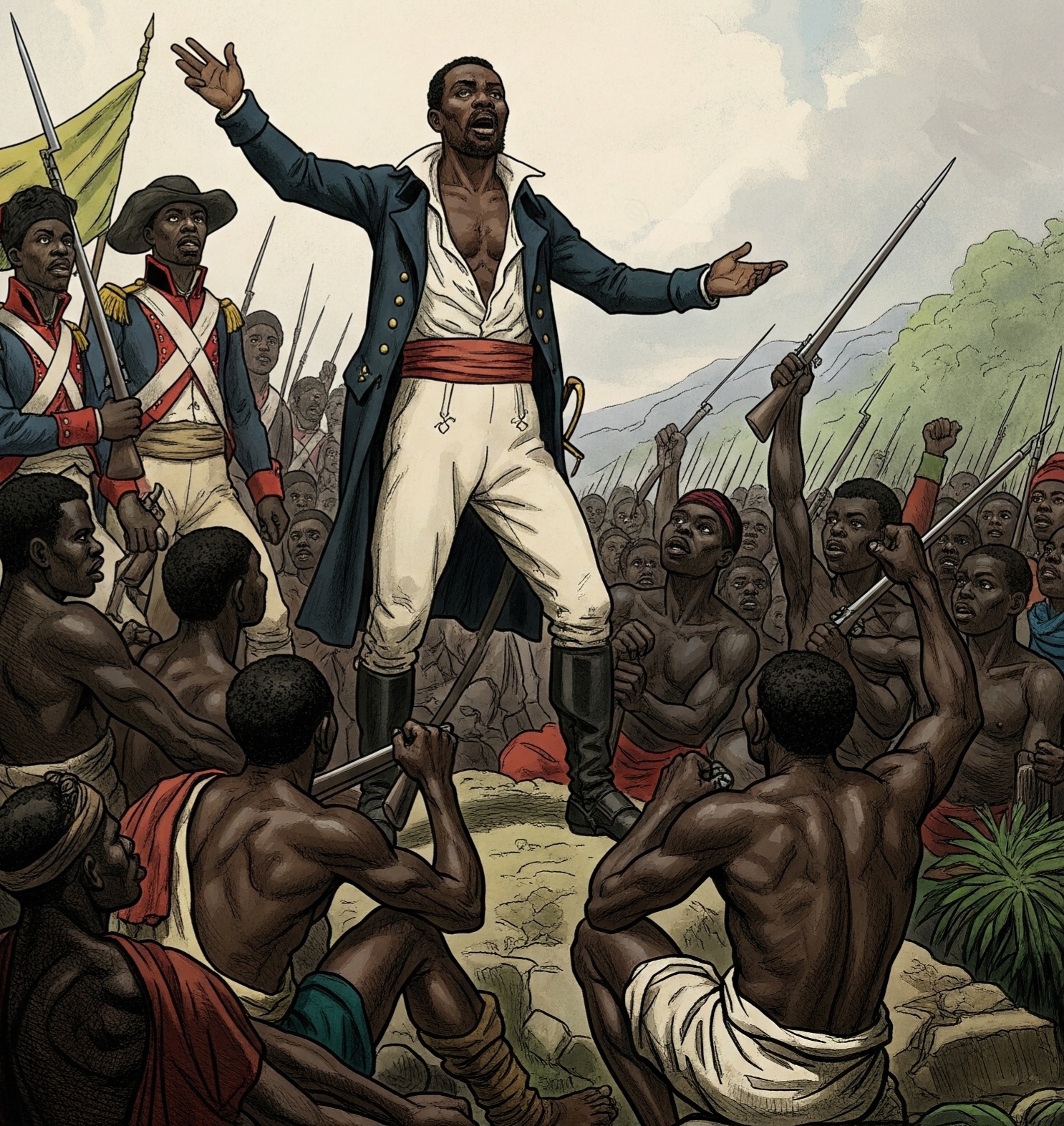
By February of 1816, Bussa was one of the few African slave drivers on the British colony. Bussa used his position and the little bit of freedom and mobility it gave him to meet with other enslaved Black people on the various plantations to organize their revolution. The freedom fighters decided that April 14th, on Easter Sunday, the anniversary of the resurrection of Jesus Christ, would be the birth of their revolution for Black freedom.
On Tuesday, the 16th of April, Bussa and a few other slaves led a small army, which consisted of about 400 freedom fighters, of both men and women. Ultimately, Bussa would be killed in battle, and his band of revolutionaries would be subdued by the overwhelming British colonial militia forces with their superior firepower. Even though the rebellion failed, it is credited as being extremely influential in the history of Barbados and its ultimate eradication of slavery on the small British colony.
Legacy

In 1985, Karl Broodhagen created the Bussa Emancipation statue. It was unveiled in Haggatt Hall in St. Michael’s Parish, 164 years after the death of Bussa and his rebellion.
In 1998, the parliament of Barbados named Bussa as one of the Ten National Heroes of Barbados.
For Additional Information And Sources Use Links Below:
https://www.blackpast.org/global-african-history/bussa-rebellion-1816/
https://www.nationalarchives.gov.uk/education/resources/bussas-rebellion/
https://en.m.wikipedia.org/wiki/Bussa%27s_rebellion


Leave a Reply