

By: Leon Kwasi Kuntuo-Asare
ORIGINS
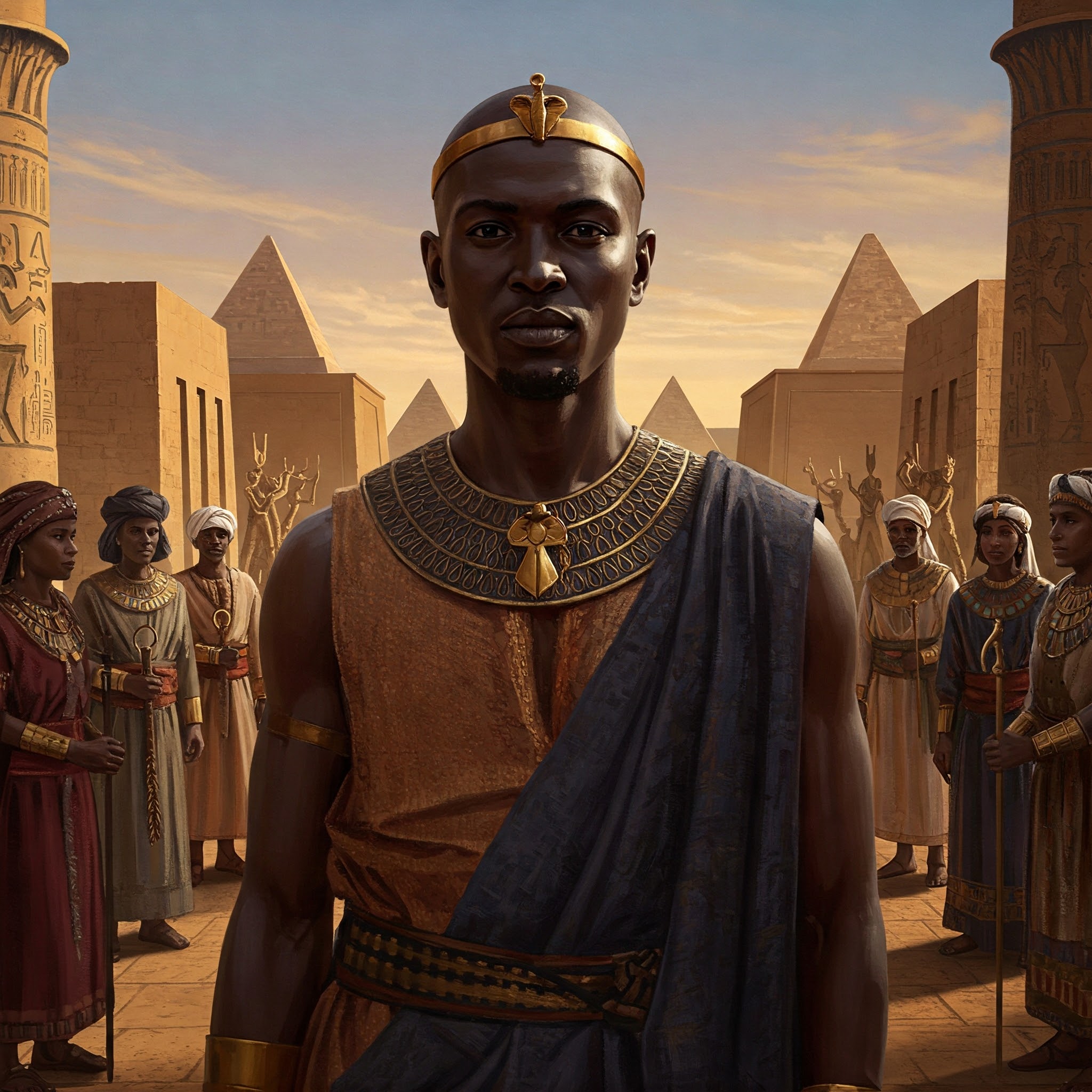
Alara’s reign took place around 780-760 BC. He was the first recorded prince of Kush, his reign marked a significant turning point in ancient African history, he transformed a fragmented Upper Nubia into a unified Monarchy and established the religious and political bedrock upon which the 25th Dynasty would later rise to prominence, leading to them conquering Egypt and ruling the two Kingdoms as a Unified Nile empire for about a century.
THE NUBIAN CONQUEROR AND UNIFER

Alara’s rise to power appears to have been a gradual but decisive process of consolidation. Prior to his emergence, Upper Nubia, stretching from Meroë in the south to the Third Cataract in the north, likely consisted of a collection of smaller, independent chiefdoms or kingdoms in the Kushite heartland around Napata. Situated near the Fourth Cataract, it held strategic importance due to its fertile lands and control over crucial trade routes along the Nile.
He embarked on a campaign of unification, bringing the disparate regions of Upper Nubia under his authority. This likely involved a combination of diplomatic maneuvering, strategic alliances, and possibly military campaigns to subdue any resistance. The unification of this extensive territory was a monumental achievement, forging a cohesive political unit that would prove to be very important for future expansion and influence by his successors.
CULTURAL AND RELIGIOUS LEADER

Beyond political unification, Alara’s reign witnessed significant cultural and religious developments. Perhaps his most enduring accomplishment was the establishment of Napata as the religious capital of Kush. This act had profound implications for the future identity and legitimacy of the Kushite kings. By choosing Napata, with its prominent Gebel Barkal (a striking sandstone mountain believed to be the dwelling place of the god Amun) Alara strategically linked his rule to the powerful Egyptian religious traditions that had long held sway in Nubia.
This association provided a divine sanction for his authority and laid the groundwork for the close religious and cultural ties that would characterize the Napatan period. The possible attestation of Alara at the Temple of Amun at Kawa, further north, suggests his active involvement in promoting the Amun cult and extending his influence into regions closer to the Egyptian sphere.

LEGACY

The legacy of Alara is primarily filtered through the lens of his Napatan successors, who consistently revered him as the founder of their royal lineage. Their inscriptions and historical narratives underscore his role in unifying Upper Nubia and establishing Napata as the kingdom’s spiritual center. This reverence highlights the profound impact his actions had on shaping the political and religious landscape of Kush. By forging a unified kingdom and anchoring its identity in a powerful religious ideology centered on Amun at Napata, Alara provided the essential framework for the subsequent rise of Kushite power. His groundwork allowed future rulers to build upon his achievements, eventually leading to the Kushite conquest of Egypt and the establishment of the 25th Dynasty.
For Additional Information Use Links Below:
https://en.m.wikipedia.org/wiki/Alara_of_Kush
https://www.britannica.com/biography/Alara




Leave a Reply