

By: Leon Kwasi Kuntuo-Asare
ORIGINS
Bass Reeves was born into bondage of slavery in 1838, in Crawford County, Arkansas. Bass Reeves was named after his grandfather (Bass Washington). His family was held in the chains of enslavement by William Steele Reeves, who was an Arkansas State legislator. When the Civil war broke out, George Reeves (the son of William Steele Reeves) joined the Confederate Army and brought his family’s then-slave Bass Reeves with him. At some point Bass Reeves and his master George Reeves got into a verbal altercation due to a card game. The verbal conflict soon became a physical one, when Bass Reeves allegedly severely beat his then-enslaver, and his own freedom. Reeves would flee to the Indian Territory and would live with the Seminoles, Creeks, and Cherokee, once integrated into their communities, Reeves learned how to speak their languages. When the 13th Amendment abolished slavery in 1865, Reeves would return to Arkansas, and would become a farmer near the city of Van Buren.
LAW👮🏿MAN

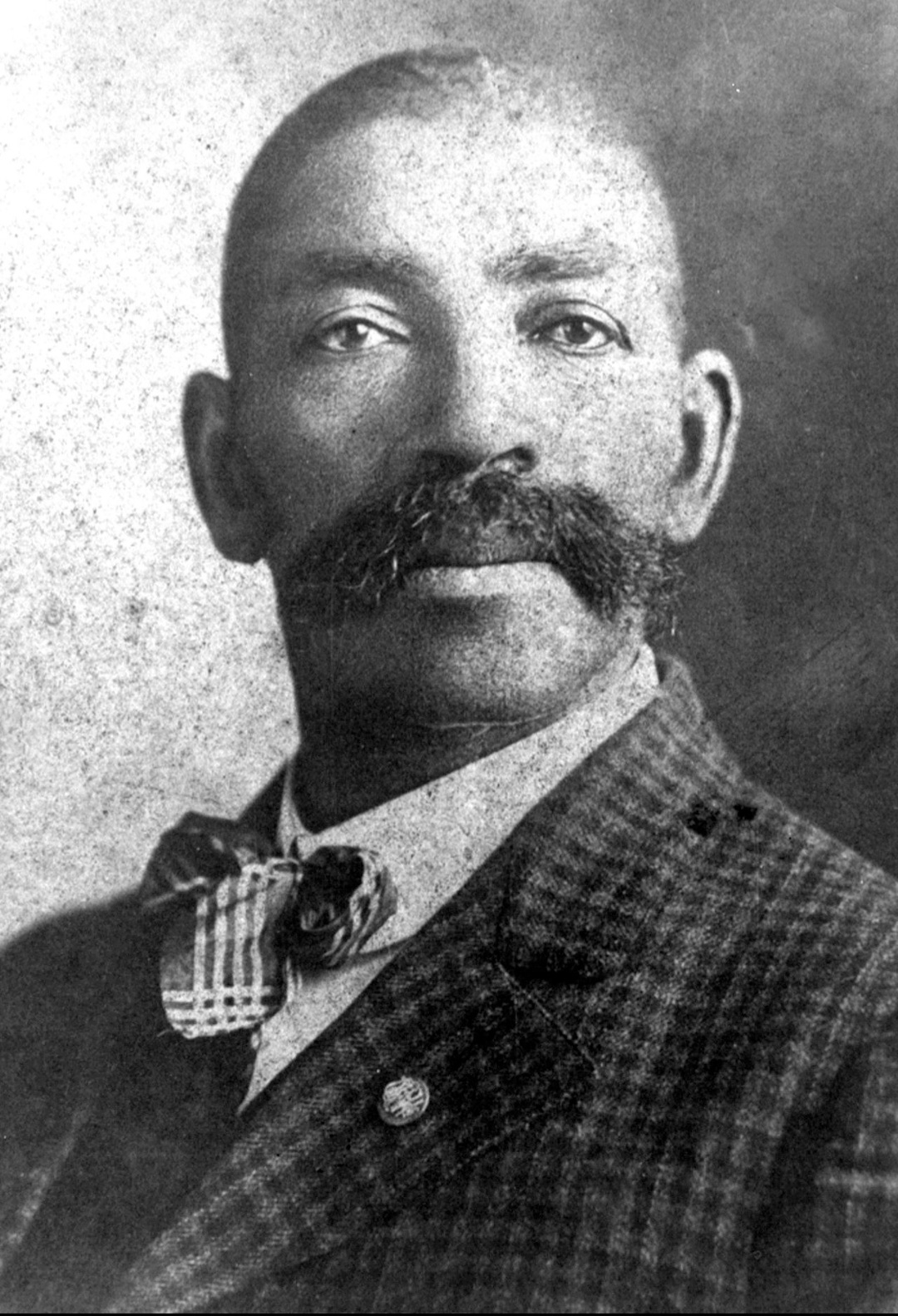
Bass Reeves (far-left) with fellow federal Officials on November 16, 1907
Reeves and his family continued to farm until 1875, that’s when James F. Fagan, the newly appointed U.S. Marshal, hired Reeves and about 200 other people to serve as Deputy U.S. Marshals. Reeves was recruited because he could speak several Native American languages of tribes in the area. Reeves would become the first deputy Black deputy to serve west of the Mississippi River. Reeves would be assigned to be the Deputy U.S. Marshall of the Western District of Arkansas, (which means he was responsible for the Indian Territory). In 1893, Reeves would be transferred to the Eastern District of Texas (in Paris, Texas). In 1897, Reeves would again be transferred , this time to the Muskogee Federal Court in the Native American territory. In all, Reeves would work 32 years as a federal law enforcement official. in those years, he used his skills as an excellent marksman and detective to arrest over felons (killing 14 criminals in self-defense). Reeves believed in the value of the law so much, he even applied it to his son, Benjamin “Bennie” Reeves, who he arrested for killing his wife (his son would stand trial and be convicted of the crime). Bennie Reeves would serve 11 years at Leavenworth in Kansas, his sentence would later be commuted, and he allegedly lived a good Christian life after he left prison.
LATER IN LIFE
The Oklahoma territory became a state in 1907, and Reeves would join the Muskogee Police Department. Reeves would serve as a police officer for a couple of years, before he became ill and was forced to retire.
HIS LEGACY

- in May of 2012, a bronze statue of Bass Reeves by Oklahoman sculptor Harold Holden was erected in Pendergraft Park in Fort Smith, in Reeves home state of Arkansas.
- Historian Art T. Burton stated that he believed Bass Reeves served as inspiration for the Lone Ranger Character. He noted they shared similarities like working with Native Americans partners and handing out souvenir dollars.
- In 2011, the US-62 Bridge, which goes from the Arkansas River(between Muskogee and Fort Gibson, Oklahoma, was rechristened the Bass Reeves Memorial Bridge.
- in 2013, Bass Reeves was posthumously inducted into the Texas Trail of Fame.


Leave a Reply